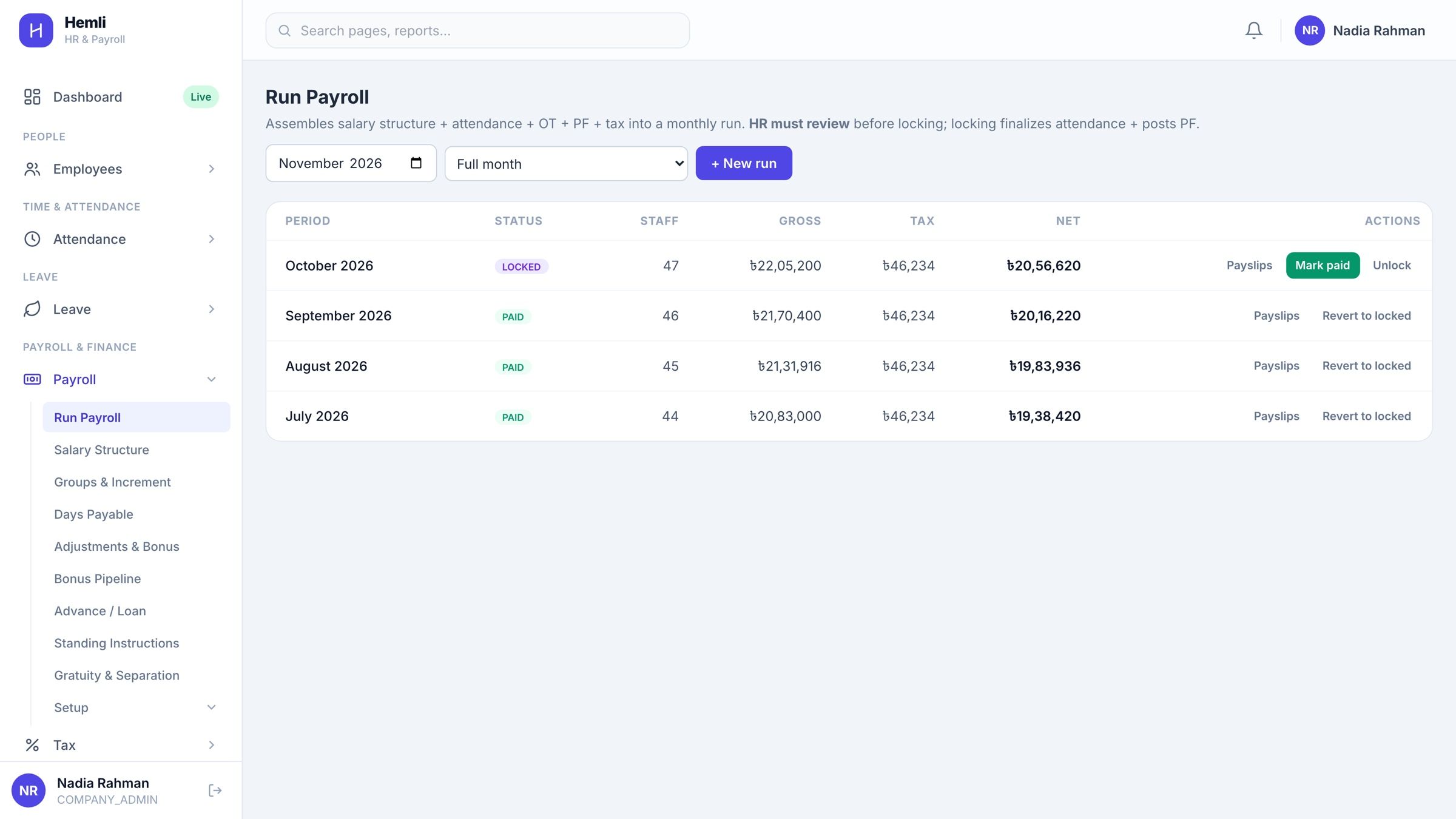
Most payroll mistakes aren’t calculation errors. They’re inputs: a leave that was approved after the sheet was made, a new joiner missing from the list, an advance nobody remembered to deduct. This checklist catches them before payday.
Before you run payroll
- Attendance is closed for the whole month. Every day has a status: present, late, leave, holiday or absent. Blank days are the most common source of a short salary.
- Pending requests are decided. Leave applications and attendance corrections still waiting for approval will change the numbers. Approve or reject them first.
- Joiners and leavers are in. Check the employee list against HR’s records for the month, including anyone who left on the last day.
- Salary changes are dated correctly. An increment that starts on the 1st must not apply to the month before.
While you check the run
- Compare the totals with last month. A big jump in gross, overtime or deductions deserves a reason you can name.
- Look at the biggest overtime numbers. The top five overtime earners are where an unapproved hour or a missed punch shows up first.
- Check advances and loan installments. Every running loan should show its deduction, and a paused one should not.
- Spot-check three payslips by hand. Pick one ordinary employee, one with leave and one with overtime, and work them out yourself.
After you pay
- Lock the month. A paid month should not change underneath its payslips. If something must change later, it should leave a record of who changed it and why.
- Send payslips the same day. Employees who see their payslip early ask questions early, while the month is still fresh.
The goal isn’t to check everything every month. It’s to check the few places where mistakes actually happen.
If you’d like these checks done for you, Hemli HR closes attendance, applies your rules and produces every payslip, and you can see it with your own data.